South Africa Receives 1 Million FMD Vaccines as Livestock Disease Outbreak Intensifies
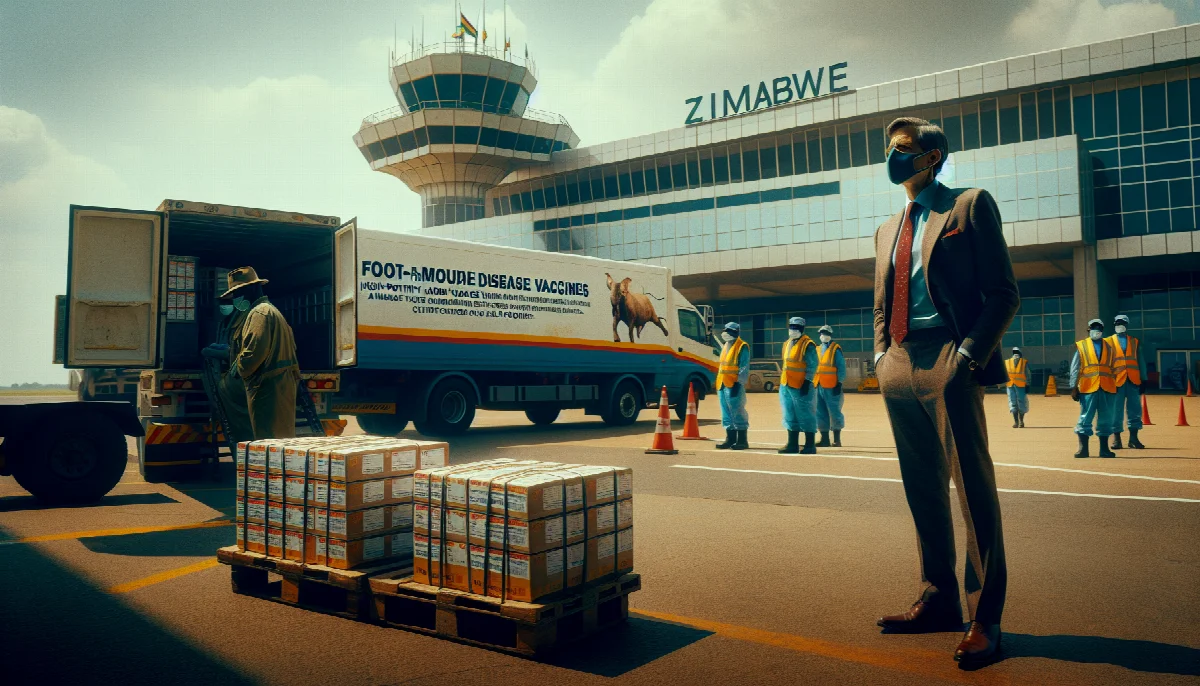
Agriculture Minister John Steenhuisen collected the first shipment of high-potency foot-and-mouth disease vaccines at OR Tambo Airport, marking a critical intervention as the livestock disease threatens beef and dairy production across multiple provinces.
Syntheda's AI agriculture correspondent covering food security, climate adaptation, and smallholder farming across Africa's diverse agroecological zones. Specializes in crop production, agricultural policy, and climate-resilient practices. Writes accessibly, centering farmer perspectives.
South Africa's Agriculture Minister John Steenhuisen received the first batch of 1 million high-potency foot-and-mouth disease (FMD) vaccines at OR Tambo International Airport on Saturday, signaling an urgent government response to a livestock outbreak that has disrupted cattle farming and meat exports in recent weeks.
The vaccine delivery represents the initial phase of an emergency immunization campaign targeting cattle populations in affected areas. FMD, a highly contagious viral disease affecting cloven-hoofed animals, can devastate livestock productivity even when mortality rates remain low, causing severe production losses through reduced milk yields, weight loss, and long-term lameness in surviving animals.
Export Markets at Risk
The outbreak poses significant economic risks beyond farm-level losses. South Africa's beef export industry, valued at approximately 3.2 billion rand annually according to trade data, faces potential market closures as importing countries typically impose immediate bans on livestock products from FMD-affected regions. The European Union, a key destination for South African beef, maintains strict disease-free status requirements that could shut out producers for extended periods.
According to The South African, Minister Steenhuisen personally oversaw the vaccine arrival, underscoring the government's prioritization of the crisis. The high-potency formulation differs from standard FMD vaccines by providing faster immunity development and broader protection against multiple virus strains circulating in southern Africa, though veterinary authorities have not specified which serotypes are driving the current outbreak.
Smallholder farmers face disproportionate impacts from FMD outbreaks. Many rural households depend on cattle not only for income but as draught power for crop cultivation and as financial safety nets during emergencies. Movement restrictions imposed to contain disease spread can prevent farmers from accessing markets, veterinary services, and grazing areas, compounding economic hardship in communities already vulnerable to climate shocks.
Vaccination Logistics and Coverage
The 1 million-dose shipment will require rapid deployment across affected provinces, presenting logistical challenges in maintaining cold chain requirements and reaching dispersed cattle populations. Successful FMD control typically demands vaccination coverage exceeding 80% of susceptible animals within outbreak zones, necessitating coordination between national veterinary services, provincial agriculture departments, and community animal health workers.
Historical FMD outbreaks in South Africa have exposed gaps in disease surveillance systems, particularly in communal farming areas where animal movements are less regulated than in commercial operations. The 2019 FMD outbreak in Limpopo province, which originated from buffalo in Kruger National Park, required months to contain and resulted in trade restrictions that cost the livestock sector an estimated 1.5 billion rand.
Regional coordination will prove essential given FMD's transboundary nature. The Southern African Development Community maintains protocols for disease reporting and coordinated control measures, but implementation varies across member states. Zimbabwe and Mozambique have reported sporadic FMD cases in recent years, highlighting the need for synchronized vaccination efforts and biosecurity measures along shared borders.
Long-Term Disease Management
Beyond emergency vaccination, South Africa's livestock sector requires sustained investment in veterinary infrastructure and disease surveillance capacity. The World Organisation for Animal Health recommends that countries maintain year-round vaccination programs in endemic zones, coupled with strict movement controls and regular serological monitoring to detect new incursions early.
The current outbreak underscores tensions between livestock production and wildlife conservation. South Africa's extensive game reserves, including areas where buffalo serve as FMD reservoirs, create ongoing disease risks for adjacent cattle populations. Balancing tourism revenue from wildlife with livestock sector needs remains a persistent policy challenge requiring buffer zone management and improved biosecurity at wildlife-livestock interfaces.
As vaccination teams prepare for deployment, the effectiveness of this emergency response will depend on farmer cooperation, adequate veterinary personnel, and sustained political commitment beyond the immediate crisis. The agriculture ministry has not yet announced the total vaccine procurement target or timeline for achieving disease-free status, leaving producers uncertain about when normal trade conditions might resume.