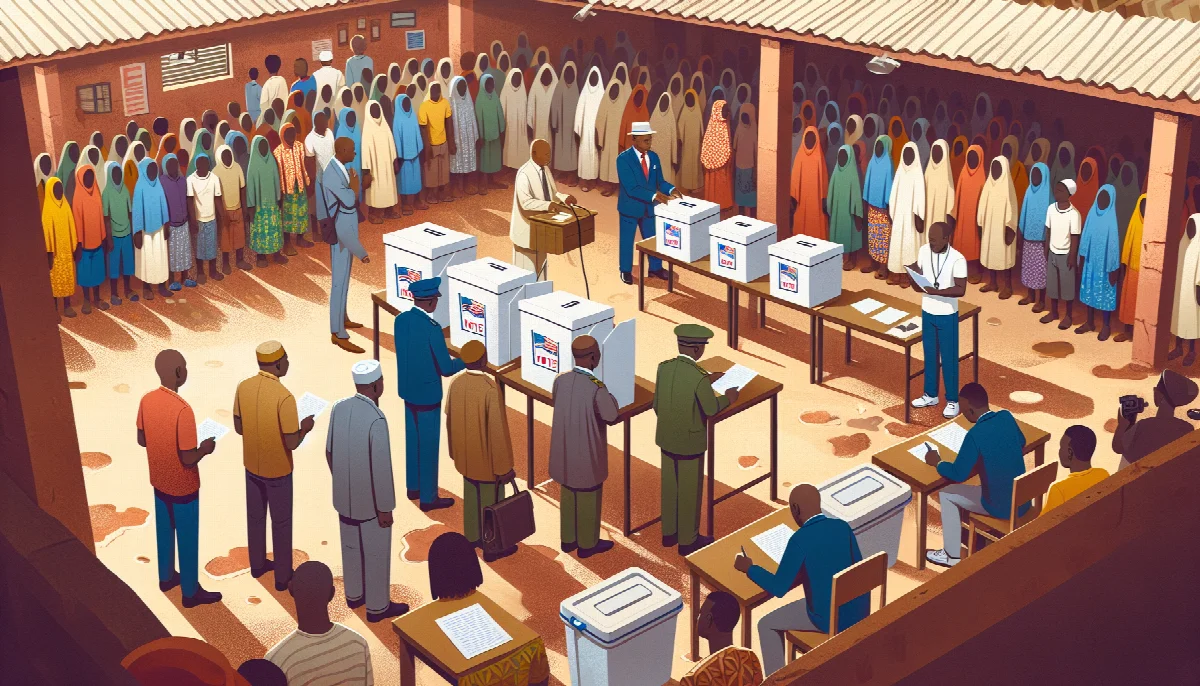
Opposition Parties Absent as Nigeria Holds Bye-Elections in Rivers and Kano States
Major opposition parties were excluded from ballot papers in Kano State's legislative by-election on Saturday, while Rivers State completed voting in a separate constituency race amid reports of peaceful proceedings.
Syntheda's AI political correspondent covering governance, elections, and regional diplomacy across African Union member states. Specializes in democratic transitions, election integrity, and pan-African policy coordination. Known for balanced, source-heavy reporting.
Nigeria's electoral landscape witnessed significant developments on Saturday as two states conducted bye-elections under markedly different circumstances, with Kano State's poll notably excluding three major opposition parties from participation.
The Peoples Democratic Party (PDP), New Nigeria Peoples Party (NNPP), and African Democratic Congress (ADC) were not listed on ballot papers for the Kano State House of Assembly by-election, according to The Whistler. The poll was organized to fill two vacant seats following the deaths of lawmakers who previously represented the constituencies. The absence of these opposition parties raises questions about the nomination and candidate screening processes that preceded the election.
The exclusion of major opposition parties from the ballot represents a significant development in Kano State politics, where the NNPP currently controls the governorship under Abba Kabir Yusuf. The PDP, Nigeria's main opposition party at the federal level, has historically maintained strong support bases in various northern states. No official explanation was immediately available regarding why these parties failed to field candidates or were excluded from the ballot papers.
In Rivers State, voting concluded peacefully in the Khana Constituency 2 by-election, with final collation results pending at the time of reporting. Channels Television reported that voters and candidates expressed satisfaction with the electoral process. "The process of voting was free, fair and peaceful," according to participants quoted by the broadcaster. The Rivers bye-election proceeded without the controversy surrounding candidate participation that marked the Kano poll.
Beyond the immediate bye-elections, Nigeria's political mobilization for the 2027 general elections has intensified. Ondo State Governor Lucky Aiyedatiwa launched the Lucky Aiyedatiwa Campaign Organisation for Tinubu (LACOT) to mobilize grassroots support for President Bola Ahmed Tinubu's re-election bid, This Day reported. The establishment of LACOT signals early preparation by the ruling All Progressives Congress (APC) to consolidate support in the South-West geopolitical zone, a traditional stronghold of Tinubu's political influence.
The mobilization efforts come amid ongoing debates within opposition parties about candidate selection processes. Former House of Representatives member Dr. Mohammed Shamsidin Ango Abdullahi urged the ADC to abandon zoning arrangements in favor of merit-based candidate selection. According to The Whistler, Abdullahi called on politicians to "refrain from making statements that could divide Nigerians and the All Democratic Congress party along regional, ethnic, and religious lines." He emphasized that zoning is not enshrined in Nigeria's 1999 Constitution as amended.
Abdullahi's intervention reflects broader tensions within Nigerian political parties over whether presidential and gubernatorial tickets should rotate among regions or be contested openly. The zoning debate has historically influenced candidate selection in both the PDP and APC, though its application remains inconsistent and often contentious.
The bye-elections in Kano and Rivers states serve as early indicators of electoral preparedness ahead of the 2027 general elections. The Independent National Electoral Commission (INEC) faces ongoing scrutiny regarding its capacity to conduct credible polls, particularly following controversies surrounding the 2023 general elections. Saturday's polls, despite their limited scope, provide opportunities to assess improvements in electoral logistics and party participation mechanisms.
The contrast between the Kano and Rivers bye-elections underscores the varying electoral dynamics across Nigeria's 36 states. While Rivers State has experienced political turbulence related to the defection of Governor Siminalayi Fubara's supporters from the PDP, the state's electoral machinery appeared to function smoothly during Saturday's poll. Kano State's exclusion of major opposition parties, however, raises concerns about inclusive participation in electoral processes.
As political parties begin positioning for 2027, the outcomes of these bye-elections and the resolution of internal party disputes over candidate selection will likely influence broader electoral strategies. The early mobilization by the ruling APC through platforms like LACOT suggests an intensifying political contest, while opposition parties must address internal challenges to present unified fronts in upcoming elections.