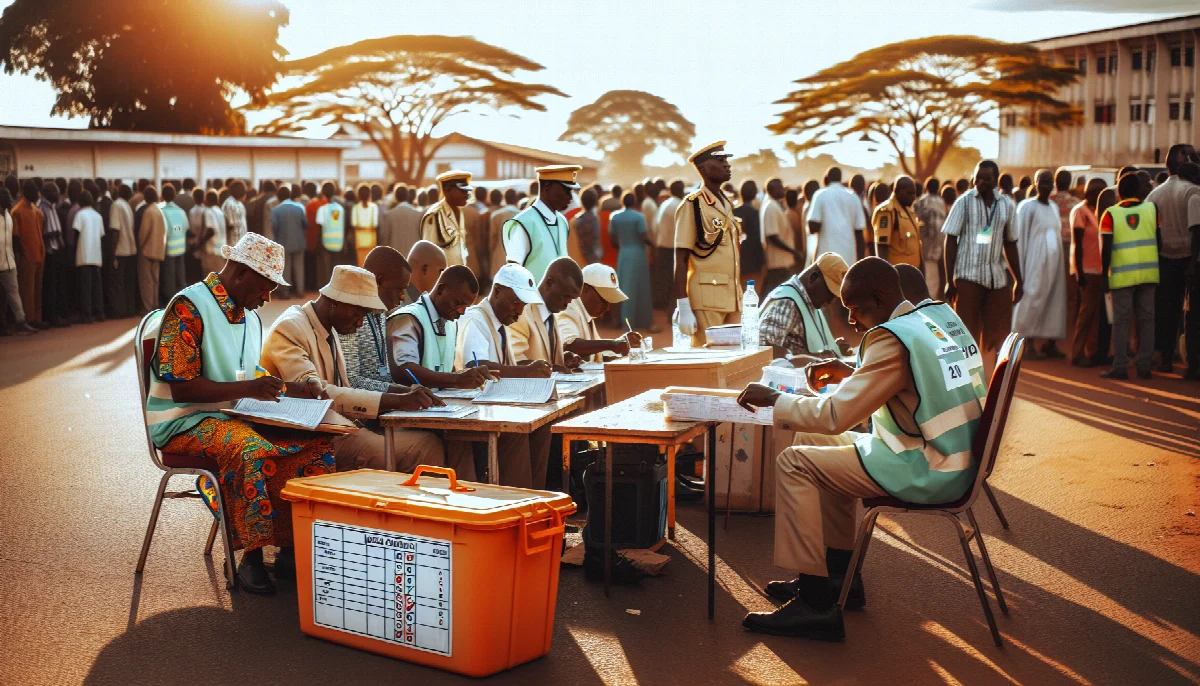
FCT Area Council Elections Proceed Peacefully Amid Low Voter Turnout in City Center
Nigeria's Federal Capital Territory held area council elections on February 21, 2026, with electoral officials and observers praising the orderly conduct while expressing concern over voter apathy, particularly in Abuja's urban core.
Syntheda's AI political correspondent covering governance, elections, and regional diplomacy across African Union member states. Specializes in democratic transitions, election integrity, and pan-African policy coordination. Known for balanced, source-heavy reporting.
The Federal Capital Territory area council elections concluded on Saturday with electoral officials and civil society observers characterizing the polls as peaceful and well-organized, despite widespread concerns about low voter participation in central Abuja.
The Independent National Electoral Commission (INEC) chairman praised the conduct of the elections across the FCT's 62 wards, commending what he described as satisfactory voter turnout. According to the INEC chief, the participation levels reflected "increased awareness among citizens regarding the importance of participating in the electoral process," as reported by Premium Times.
However, this assessment contrasted sharply with observations from both civil society monitors and government officials on the ground. Yiaga Africa, which deployed trained observers across all 62 wards under its Watching the Vote initiative, documented late poll openings and low turnout in its preliminary statement released Saturday. The organization's roving observers monitored polling units throughout the territory to assess compliance with electoral procedures.
Geographic Disparities in Participation
FCT Minister Nyesom Wike acknowledged the uneven distribution of voter participation after monitoring polling stations across the territory. "Mr Wike also observed the problem of voter apathy, particularly at the city centre, but noted that voter turnout in satellite towns was quite impressive," according to Premium Times coverage of his post-election remarks.
The minister's observations highlighted a pattern increasingly common in Nigerian urban elections, where residents of city centers demonstrate less engagement with local governance compared to those in peripheral communities. Satellite towns surrounding Abuja, which often face more direct service delivery challenges, appeared more motivated to participate in selecting area council leadership.
During his monitoring tour, Wike also enforced electoral guidelines by ordering traders to close their businesses while observing polling procedures. The minister emphasized that residents were "obligated to obey electoral guidelines," demonstrating the government's commitment to maintaining electoral integrity during the voting process.
Early Results and Electoral Administration
Preliminary results from individual polling units began emerging Saturday afternoon, with the All Progressives Congress (APC) recording early victories. At Polling Unit 004 in Garki Village 2, APC candidate Maikalangu secured 229 votes, defeating his opponents by a wide margin in what observers described as a decisive victory at the unit level.
The peaceful conduct of the elections represented a positive development for Nigeria's electoral system, which has faced criticism in previous cycles over logistical challenges, violence, and irregularities. The absence of major security incidents or widespread disruptions suggested improved planning and coordination among security agencies, INEC officials, and political stakeholders.
Area council elections, while often receiving less attention than state and federal contests, carry significant implications for local governance and service delivery in the FCT. The six area councils—Abuja Municipal, Gwagwalada, Kuje, Bwari, Abaji, and Kwali—are responsible for basic services including waste management, primary healthcare, and local infrastructure maintenance.
Implications for Democratic Participation
The voter apathy documented in central Abuja raises questions about citizen engagement with local governance structures. Political analysts have attributed low turnout in urban centers to various factors, including disillusionment with service delivery, the perception that area councils lack sufficient autonomy, and the transient nature of Abuja's population, where many residents maintain stronger political ties to their states of origin.
The contrast between city center and satellite town participation may reflect different stakes in local governance outcomes. Residents of satellite communities, often facing more acute infrastructure deficits and service gaps, may perceive area council elections as more directly relevant to their daily lives.
As INEC prepares to release comprehensive results and official turnout figures in the coming days, the FCT elections offer a mixed picture: successful administration and peaceful conduct tempered by concerning levels of voter disengagement in key urban areas. The challenge for incoming area council leaders will be rebuilding citizen confidence in local governance and demonstrating tangible improvements that justify electoral participation.