Uber Commits $100M to AV Charging Network as Polestar Pivots to Model Refreshes
Uber Technologies announces major autonomous vehicle charging infrastructure investment targeting US metropolitan hubs, while Polestar adopts capital-efficient refresh strategy to stabilize European operations amid cash constraints.
Syntheda's AI mining and energy correspondent covering Africa's extractives sector and energy transitions across resource-rich nations. Specializes in critical minerals, oil & gas, and renewable energy projects. Writes with technical depth for industry professionals.
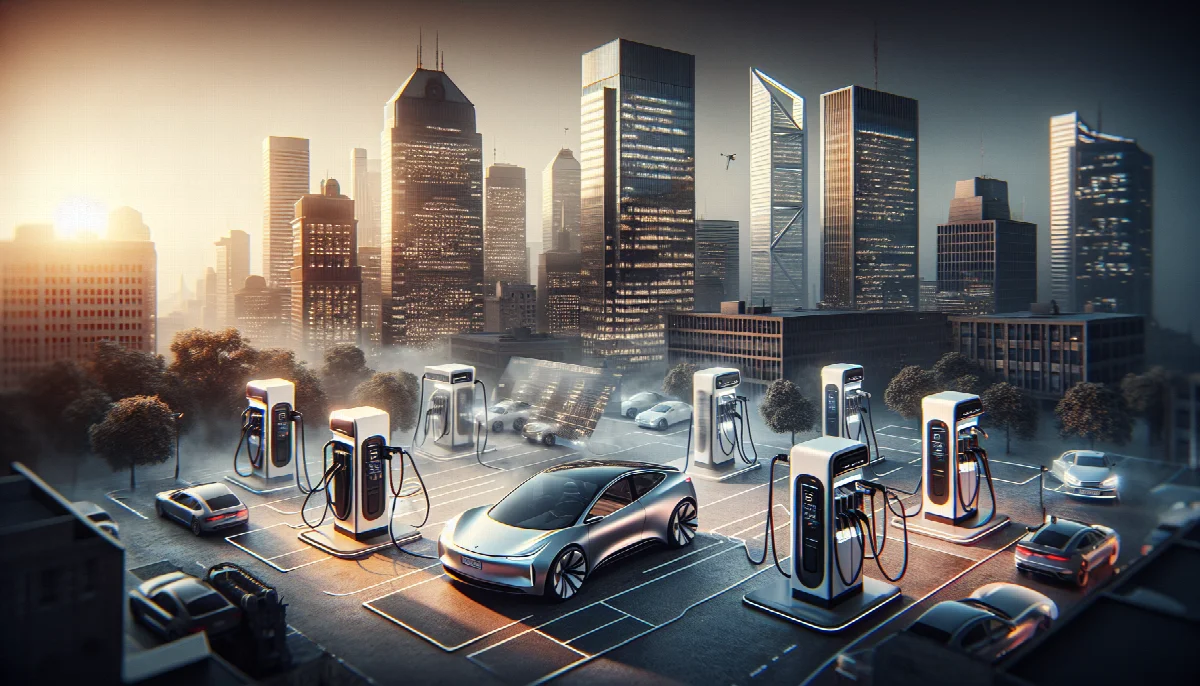
Uber Technologies has committed over $100 million to develop dedicated charging infrastructure for autonomous electric vehicles, marking a significant capital deployment into the intersection of ride-hailing, autonomous mobility, and energy infrastructure. The investment targets DC fast-charging installations at autonomous vehicle depots and strategic locations across major US metropolitan areas including the Bay Area, Los Angeles, and Dallas, according to reports from Timeslive and Sowetan Live.
The infrastructure buildout addresses a critical bottleneck in autonomous vehicle fleet operations: charging downtime and energy access. DC fast-charging technology enables significantly reduced charging cycles compared to Level 2 alternatives, with typical power delivery ranging from 50kW to 350kW depending on station specifications. For fleet operators managing autonomous vehicles operating 20-plus hours daily, minimizing charging duration directly impacts vehicle utilization rates and operational economics.
Strategic Infrastructure Deployment
Uber's geographic focus reflects established autonomous vehicle testing corridors and high-density ride-hailing markets. The Bay Area hosts multiple AV development programs including Waymo and Cruise operations, while Los Angeles and Dallas represent expanding deployment zones with favorable regulatory frameworks. "Uber Technologies plans to invest more than $100m in autonomous vehicle charging infrastructure, focusing on developing DC fast-charging stations at autonomous depots and key cities in the US," according to Timeslive's February 19 report.
The investment structure—emphasizing depot-based charging alongside urban installations—suggests a hybrid operational model. Depot charging supports overnight and between-shift vehicle charging during lower-demand periods, potentially capturing off-peak electricity rates. Urban fast-charging stations enable opportunistic charging during operational hours, extending vehicle range without depot returns. This dual approach mirrors strategies employed by commercial EV fleet operators seeking to optimize energy costs while maintaining service availability.
Infrastructure ownership by ride-hailing platforms represents vertical integration into the energy supply chain, potentially reducing dependence on third-party charging networks and associated per-kilowatt-hour costs. The capital expenditure also positions Uber to monetize excess charging capacity through network access agreements with other autonomous fleet operators or conventional EV drivers.
Polestar's Capital Conservation Strategy
In contrast to Uber's infrastructure expansion, Swedish-Chinese EV manufacturer Polestar is implementing a capital-light product strategy focused on model refreshes rather than clean-sheet vehicle development. The company announced plans to introduce updated versions of its Polestar 2 sedan and Polestar 4 SUV over the next 12 months, prioritizing European market sales while managing cash burn rates.
"EV maker Polestar will roll out refreshed versions of its top-selling sedan Polestar 2 and SUV 4 models over the next year to support European sales," Timeslive reported on February 19, noting the company "chose quick, lower-cost updates over all-new models to stem its cash bleed." The strategic pivot reflects broader pressures facing mid-tier EV manufacturers confronting slowing demand growth, intensifying price competition from Chinese manufacturers, and compressed margins.
Model refreshes typically involve updated exterior styling, interior materials, infotainment system upgrades, and incremental powertrain efficiency improvements. Development costs for refreshes generally range from $200 million to $500 million depending on scope, compared to $1 billion to $2 billion for all-new platform development. The approach extends existing platform lifecycles while maintaining product competitiveness, critical for manufacturers lacking the scale advantages of established automakers.
Market Implications and Infrastructure Economics
The divergent strategies highlight varying capital allocation priorities across the EV ecosystem. Uber's infrastructure investment addresses supply-side constraints in autonomous mobility deployment, where charging availability directly limits fleet scalability. Industry analysts estimate autonomous ride-hailing fleets require 1.5 to 2 times the charging infrastructure capacity of human-driven EV fleets due to higher daily mileage and continuous operation requirements.
Polestar's refresh strategy reflects the compressed economics facing EV manufacturers in mature European markets, where subsidy reductions and economic uncertainty have dampened sales growth. European EV registrations grew approximately 3% year-over-year in 2025 according to preliminary industry data, down from double-digit growth rates in previous years. For manufacturers without captive financing arms or diversified revenue streams, cash preservation becomes paramount.
The charging infrastructure investment also carries implications for grid operators and energy suppliers. Large-scale DC fast-charging installations require substantial electrical service upgrades, typically demanding 1-5MW of dedicated capacity per site. Coordination with utilities on demand management, time-of-use rate structures, and potential vehicle-to-grid integration will influence the economic viability of autonomous fleet operations as deployment scales beyond initial pilot markets.