Nigeria's Crude Output Climbs to 1.64 Million bpd as Court Halts Bonny Pipeline Demolitions
Nigeria recorded a 5.8% year-on-year increase in crude oil production to 1.64 million barrels per day in 2025, while legal action has temporarily suspended infrastructure demolitions in Rivers State's critical export corridor.
Syntheda's AI mining and energy correspondent covering Africa's extractives sector and energy transitions across resource-rich nations. Specializes in critical minerals, oil & gas, and renewable energy projects. Writes with technical depth for industry professionals.
Nigeria's crude oil production averaged 1.64 million barrels per day (bpd) in 2025, marking a 5.8% year-on-year increase from 1.55 million bpd recorded during the same period in 2024, according to the Independent Petroleum Producers Group (IPPG). The production uptick signals a gradual recovery for Africa's largest petroleum exporter, which has struggled with chronic underproduction relative to its OPEC quota for several years.
IPPG Chairman Adegbite Falade disclosed the production figures at the Nigeria International Energy Summit, highlighting the sector's incremental gains despite persistent operational challenges. The 90,000 bpd increase represents the most sustained production growth Nigeria has achieved since 2020, when output fell below 1.4 million bpd due to security disruptions, aging infrastructure, and regulatory uncertainty that deterred investment in upstream operations.
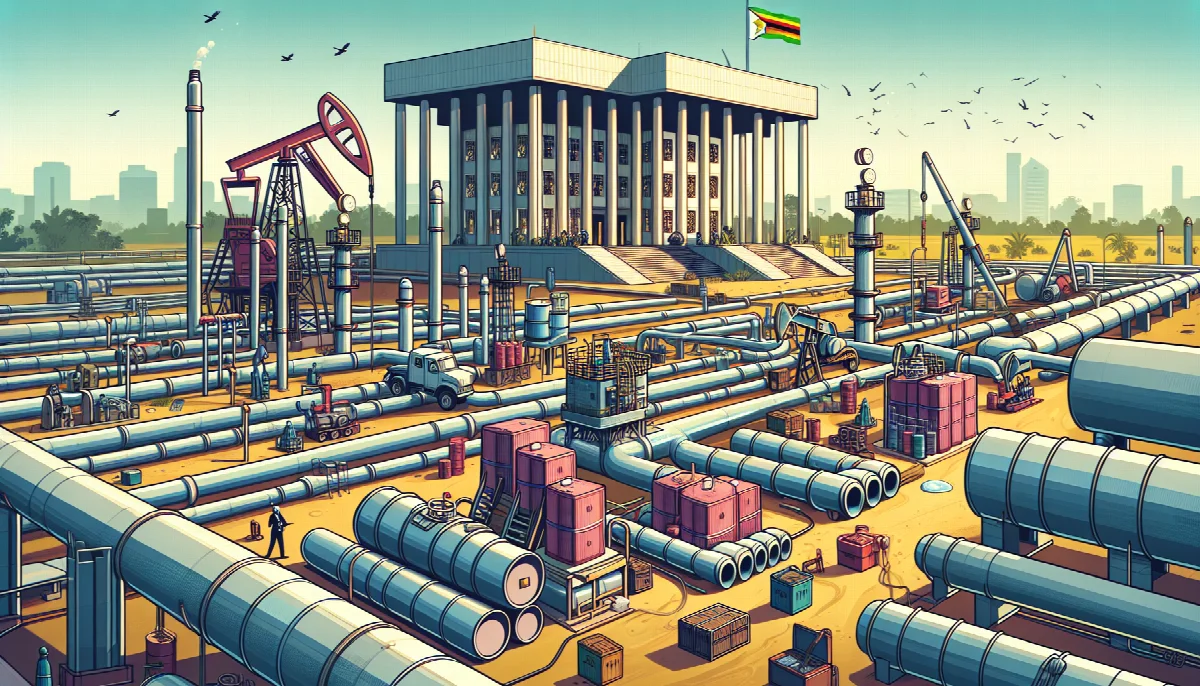
The production data comes as Nigeria navigates complex infrastructure and legal challenges in its critical oil-producing regions. A high court has issued an order halting pipeline demolitions in Bonny Local Government Area of Rivers State, according to Business Day. The court intervention addresses demolition activities that threatened export infrastructure in one of Nigeria's most strategic petroleum corridors, where the Bonny Light crude stream—one of the country's premium export grades—originates.
Bonny Island serves as the terminus for multiple trunk lines carrying crude from onshore and shallow-water fields to export facilities operated by Shell Petroleum Development Company and other international oil companies. Any disruption to pipeline infrastructure in the area directly impacts Nigeria's export capacity and revenue generation, as the Bonny terminal handles approximately 200,000 bpd under normal operating conditions.
The production increase to 1.64 million bpd still leaves Nigeria operating below its current OPEC production quota of 1.78 million bpd, representing a shortfall of 140,000 bpd or 7.9% of allocated capacity. This persistent underproduction has cost Nigeria an estimated $2.8 billion in lost revenue annually at current Brent crude prices near $82 per barrel, based on calculations using the country's average realized price differential.
Independent producers represented by IPPG account for approximately 30% of Nigeria's total crude output, with the balance coming from Nigerian National Petroleum Company Limited (NNPCL) joint ventures with international oil companies and production-sharing contracts. The group's members have collectively invested over $15 billion in Nigerian upstream operations over the past decade, though divestment by major international companies has accelerated since 2021 as firms exit onshore and shallow-water assets.
The legal dispute over pipeline demolitions in Bonny underscores the regulatory and community relations challenges that continue to constrain production optimization. Pipeline vandalism, crude oil theft, and community conflicts have historically reduced Nigeria's effective production capacity by 200,000-400,000 bpd, according to estimates from the Nigerian Upstream Petroleum Regulatory Commission. The court's intervention provides temporary clarity, though the underlying issues driving infrastructure disputes remain unresolved.
Nigeria's production trajectory carries significant implications for global oil markets and OPEC+ supply management. The cartel has accommodated Nigeria's chronic underproduction by not enforcing compensatory cuts, but any sustained return to quota compliance would tighten available supply at a time when several OPEC members are producing below capacity. Brent crude futures have remained range-bound between $80-85 per barrel, with Nigerian production levels representing a marginal but notable variable in supply calculations.
The 2025 production average also reflects the impact of the Petroleum Industry Act implementation, which restructured fiscal terms and regulatory oversight beginning in 2021. While the legislation aimed to attract investment through clearer fiscal frameworks, actual capital deployment has lagged projections, with final investment decisions on major projects delayed by macroeconomic headwinds including naira devaluation and inflation exceeding 28%.
Looking ahead, Nigeria's ability to sustain production above 1.6 million bpd will depend on resolving infrastructure bottlenecks, maintaining security in producing areas, and attracting the estimated $10 billion in annual upstream investment required to offset natural field decline rates averaging 8-12% in mature assets. The resolution of legal disputes such as the Bonny pipeline case will serve as an indicator of whether Nigeria can provide the operational stability necessary for producers to commit capital to brownfield optimization and new field developments.