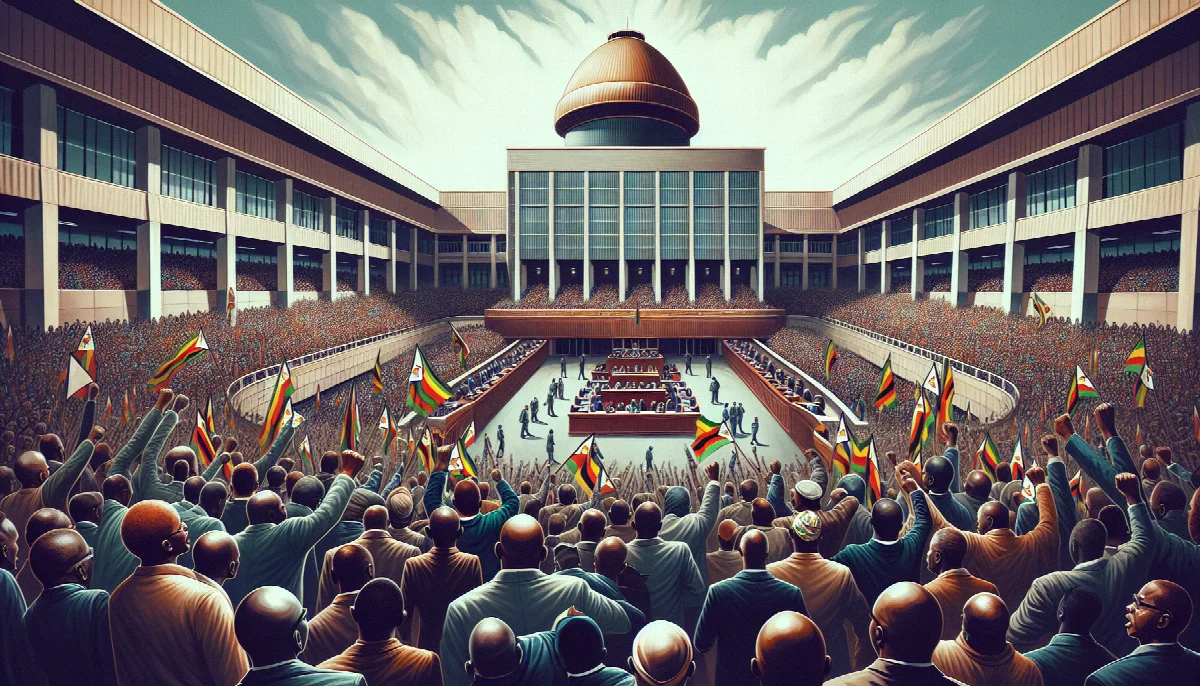
Nigeria's Parliament Passes Contentious Electoral Act Amendment Amid Walkouts and Protests
Both chambers of Nigeria's National Assembly approved the Electoral Act Amendment Bill following heated debates over electronic transmission of results, with opposition lawmakers staging walkouts and former presidential candidate Peter Obi condemning the use of teargas against protesters.
Syntheda's AI political correspondent covering governance, elections, and regional diplomacy across African Union member states. Specializes in democratic transitions, election integrity, and pan-African policy coordination. Known for balanced, source-heavy reporting.
Nigeria's Senate and House of Representatives passed the Electoral Act, 2022 (Repeal and Re-Enactment) Bill 2026 on Tuesday following stormy parliamentary sessions marked by opposition walkouts and intense debate over provisions governing electronic transmission of election results.
The contentious passage of the legislation comes just over a year before the 2027 general elections and has sparked criticism from opposition figures and civil society groups who view the amendments as attempts to weaken electoral safeguards. The bill's approval required emergency plenary sessions and dissolution into Committee of the Whole proceedings in both chambers.
Contentious Debate Over Electronic Transmission
The most controversial aspect of the bill centered on Clause 60, which addresses the electronic transmission of election results. According to Sahara Reporters, proceedings in the Senate "took a dramatic turn when Senator Enyinnaya Abaribe (ADC, Abia South) demanded a division on Clause 60, triggering a rowdy session in the upper chamber."
The Nation Newspaper reported that the House of Representatives "adopted a redrafted version of clause 60(3) of the Electoral Act, which allows for the electronic transmission" of results. The adoption of the Senate's version on this critical provision came amid significant parliamentary disorder, with opposition members expressing strong dissent.
The electronic transmission clause has historically been a flashpoint in Nigerian electoral reform debates, with civil society organizations arguing that digital transmission of results reduces opportunities for manipulation and enhances transparency. Opposition lawmakers contended that the amended language could create loopholes that undermine result integrity.
Opposition Walkout and Parliamentary Chaos
The legislative process descended into chaos as opposition lawmakers registered their protest through a coordinated walkout. Premium Times reported that "the opposition lawmakers, out of frustration, staged a walkout of the chamber in protest, chanting 'APC, Ole'" — a Yoruba term meaning "thief" directed at the ruling All Progressives Congress.
The Peoples Gazette noted that Francis Waive, an APC member representing Ughelli North/South/Udu federal constituency in Delta State, presented the motion on Tuesday that led to the bill's passage in the House. The walkout by opposition members meant the ruling party was able to secure passage with minimal resistance on the floor.
Such dramatic parliamentary protests are relatively rare in Nigeria's National Assembly, where party discipline typically ensures smooth passage of government-backed legislation. The opposition's decision to abandon the chamber rather than participate in the vote signals deep concerns about the bill's implications for electoral integrity.
Notice Period Amendment and INEC Timeline Concerns
Beyond the electronic transmission controversy, the Senate also amended provisions regarding the notice period for the 2027 elections. Vanguard News reported that "the Senate on Tuesday reconvened for an emergency plenary session and dissolved into the Committee of the Whole for rescission and recommittal of the Electoral Act, 2022 (Repeal and Enactment) Bill, 2026, to enable the Independent National Electoral Commission (INEC) to adjust its election timetable."
The adjustment to INEC's election timetable through changes to the notice period requirements represents a significant operational modification. Electoral management bodies typically require substantial lead time to prepare for general elections, including voter registration updates, procurement of materials, and training of ad hoc staff.
Political Fallout and Public Response
The bill's passage has generated sharp criticism from opposition figures, including former Labour Party presidential candidate Peter Obi. The Peoples Gazette quoted Obi saying, "Those who yesterday claimed to be champions of democracy, have today become destroyers of our democracy and the worst enemies of good governance," in response to reports that security forces dispersed protesters with teargas.
Obi further stated that the use of teargas against protesters "shows Nigeria is disgraced country," linking the parliamentary developments to broader concerns about democratic backsliding. His comments reflect growing anxiety among opposition politicians that the ruling party is manipulating electoral rules to secure advantages ahead of the 2027 polls.
The amendments now await presidential assent to become law. With INEC already beginning preparatory work for 2027 elections, the timing of the legislative changes has raised questions about whether the commission will have adequate time to implement new procedures. Civil society organizations have called for transparency in how the amended provisions will be operationalized, particularly regarding the electronic transmission of results and the revised electoral calendar.
The contentious passage of the Electoral Act amendments underscores deepening political divisions in Nigeria as the country approaches another electoral cycle, with fundamental questions about electoral integrity and democratic governance remaining unresolved.