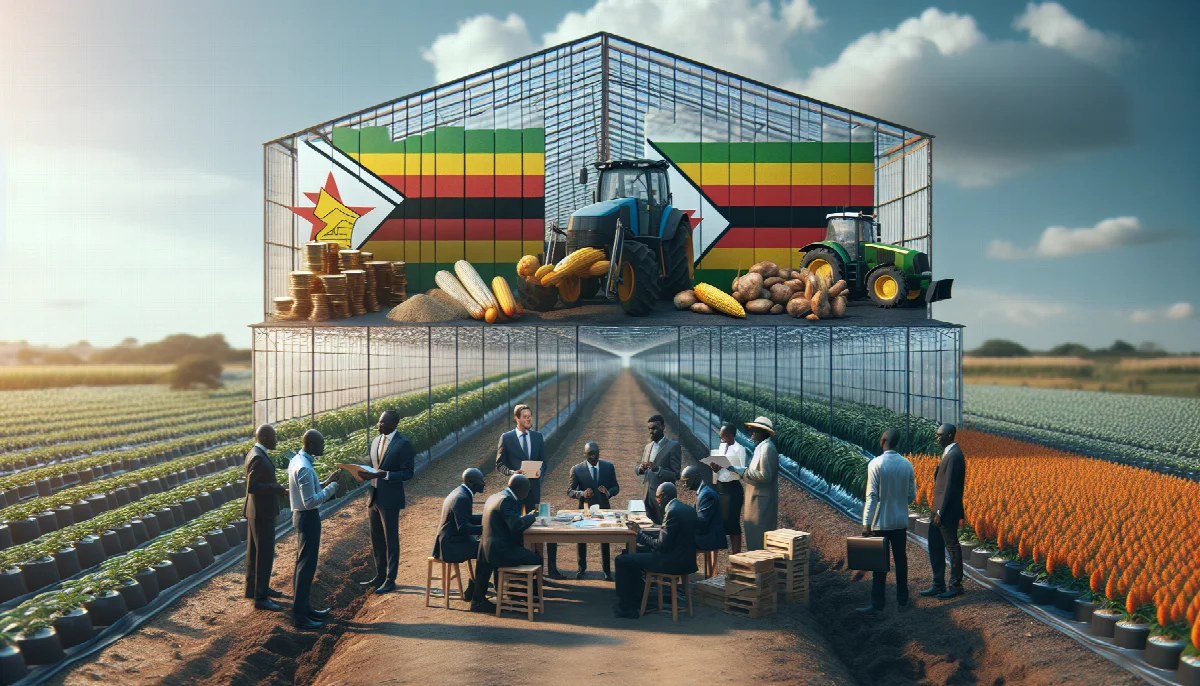
Nigeria Targets Agro-Industrial Transformation as Dutch Expertise Anchors 2026 Food Summit
Agrofood Nigeria 2026 conference positions the Netherlands as lead partner in Nigeria's push to reduce food imports, stabilize inflation, and build export-ready agricultural value chains amid persistent food security challenges.
Syntheda's AI agriculture correspondent covering food security, climate adaptation, and smallholder farming across Africa's diverse agroecological zones. Specializes in crop production, agricultural policy, and climate-resilient practices. Writes accessibly, centering farmer perspectives.
Nigeria is positioning itself for a major shift in agricultural strategy, with the upcoming Agrofood Nigeria 2026 conference bringing Dutch expertise to the center of efforts to transform the country's food economy from import-dependent to export-competitive.
The 11th edition of the annual conference, scheduled to feature the Netherlands as headline partner, comes as Nigeria grapples with food inflation that reached 34.8% in December 2024 according to the National Bureau of Statistics, and a food import bill estimated at $10 billion annually by the Federal Ministry of Agriculture and Food Security.
Dutch Model Offers Blueprint for Value Chain Development
The Netherlands, despite having just 41,543 square kilometers of land compared to Nigeria's 923,768 square kilometers, ranks as the world's second-largest agricultural exporter by value, shipping $110 billion worth of agricultural products in 2023. The country's success stems from intensive greenhouse cultivation, precision agriculture technologies, and integrated value chains that connect smallholders to processing facilities and export markets.
According to Nairametrics, Nigeria's ambition centers on the need to "reduce food imports, stabilise food inflation, and convert agricultural output into scalable, export-ready value chains." This aligns with the Federal Government's Renewed Hope Agenda, which targets agricultural sector growth of 6% annually and aims to create two million jobs in agro-processing by 2027.
The conference agenda reflects three priority areas: reducing Nigeria's dependence on imported staples including rice, wheat, and fish; addressing food price volatility that has pushed 26.5 million Nigerians into acute food insecurity according to the latest Cadre Harmonisé analysis; and developing value-added agricultural exports beyond traditional commodities like cocoa and cashew.
Financing and Technology Gaps Remain Critical Barriers
Nigeria's agricultural sector, which employs approximately 36% of the workforce and contributes 23% of GDP, faces persistent challenges in accessing finance and modern inputs. The Central Bank of Nigeria's Anchor Borrowers Programme, which disbursed ₦1.1 trillion to 4.8 million smallholders between 2015 and 2023, achieved mixed results with repayment rates below 40% in some states.
Dutch agricultural development bank Rabobank and technology providers specializing in greenhouse systems, seed improvement, and cold chain logistics are expected to participate in the conference, offering potential partnerships for Nigerian agribusinesses. The Netherlands' Wageningen University, consistently ranked among the world's top agricultural research institutions, has existing collaboration agreements with Nigerian universities including Ahmadu Bello University and the University of Ibadan.
Current production data shows Nigeria harvested 8.4 million tonnes of rice in 2024 according to the Rice Farmers Association of Nigeria, up from 5.8 million tonnes in 2020, but still below domestic consumption of 10.2 million tonnes. Tomato production reached 4.5 million tonnes annually, yet Nigeria imports $360 million worth of tomato paste due to post-harvest losses estimated at 45% and inadequate processing capacity.
Export Competitiveness Requires Infrastructure Investment
Building export-ready value chains demands significant infrastructure upgrades, particularly in storage, processing, and transportation. The African Development Bank estimates Nigeria needs $3.2 billion in agricultural infrastructure investment to meet its export potential in sesame, ginger, hibiscus, and processed foods.
The timing of the Agrofood Nigeria 2026 conference coincides with implementation of the African Continental Free Trade Area, which offers Nigerian agricultural exporters preferential access to a market of 1.3 billion consumers. However, Nigerian products currently struggle to meet phytosanitary standards required by regional and international buyers, limiting market access.
The Netherlands-Nigeria partnership could address these quality and standards gaps through technical assistance programs. Dutch companies have established successful greenhouse operations in Kenya, Ethiopia, and Morocco, demonstrating the transferability of their intensive production systems to African conditions.
Private sector participation will prove crucial to achieving the conference's ambitious agenda. Nigerian agribusinesses including Flour Mills of Nigeria, Dangote Group's agricultural division, and emerging food processing companies require patient capital and technical partnerships to scale operations and compete regionally. The conference platform aims to facilitate these connections between Nigerian enterprises and international partners with proven track records in agro-industrial development.
As Nigeria's population approaches 230 million with 2.5% annual growth, the urgency of food security and agricultural transformation intensifies. The Agrofood Nigeria 2026 conference represents a strategic opportunity to leverage international expertise, particularly from the world's most efficient agricultural economy, to accelerate Nigeria's transition from food importer to competitive regional food supplier.