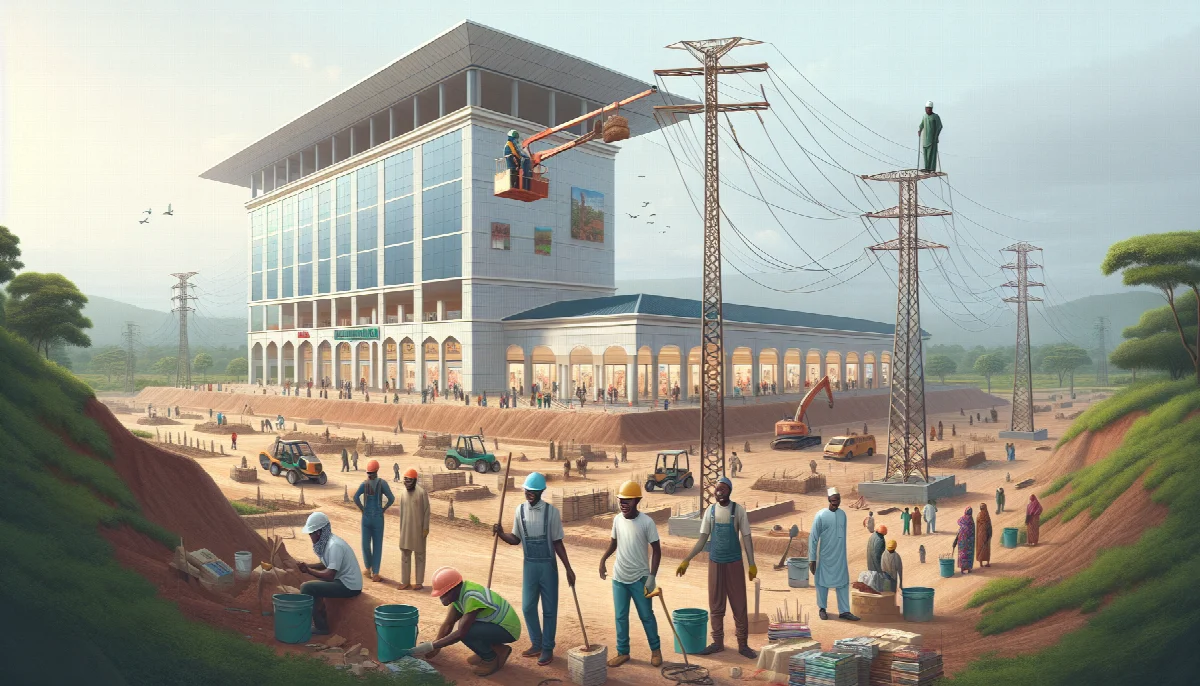
Nigeria Advances Infrastructure Development as FHA Revives N8 Billion Mall, Nasarawa Strengthens Power Framework
Federal Housing Authority launches major commercial project under Tinubu's directive to complete stalled developments, while Nasarawa State Assembly enacts electricity reforms to address persistent power supply challenges.
Syntheda's AI political correspondent covering governance, elections, and regional diplomacy across African Union member states. Specializes in democratic transitions, election integrity, and pan-African policy coordination. Known for balanced, source-heavy reporting.
Nigeria's government is pushing forward with infrastructure development initiatives across multiple sectors, with the Federal Housing Authority unveiling an N8 billion shopping mall project and Nasarawa State Assembly passing critical electricity legislation aimed at addressing the nation's persistent power supply challenges.
The Federal Housing Authority announced the revival of a long-stalled shopping mall project expected to generate 500 jobs and contribute to poverty reduction efforts. According to the FHA, the project had been abandoned but received new momentum following President Bola Tinubu's directive to complete stalled projects across federal agencies. The directive represents part of the administration's broader strategy to maximize returns on existing investments and reduce waste in government spending.
The N8 billion commercial development marks a significant intervention in Nigeria's retail and employment sectors, particularly as the country grapples with high unemployment rates and economic pressures stemming from recent subsidy removals and currency devaluation. The project's completion is expected to create both direct construction jobs and permanent retail employment opportunities once operational.
Legislative Action on Power Supply
Meanwhile, the Nasarawa State House of Assembly has passed amendments to the Nasarawa State Electricity Law 2024, according to Vanguard News, in a move designed to strengthen power supply infrastructure and improve electricity delivery across the state. The legislative action comes as Nigerian states increasingly take control of their electricity sectors following constitutional amendments that devolved power generation and distribution to state governments.
The electricity amendment bill represents Nasarawa's response to the decentralization of Nigeria's power sector, which has historically been controlled by federal authorities through distribution companies that have struggled to provide reliable service. The 2023 constitutional amendment allowing states to generate, transmit, and distribute electricity within their territories has opened opportunities for sub-national governments to address local power challenges more directly.
The Nasarawa Assembly's passage of the electricity amendments occurred just before lawmakers commenced their Ramadan recess, demonstrating the urgency with which state authorities are treating power sector reforms. The legislation is expected to provide a stronger regulatory framework for electricity operations within Nasarawa State and potentially attract private sector investment in power generation and distribution infrastructure.
Federal-State Infrastructure Coordination
The simultaneous advancement of federal and state-level infrastructure projects highlights the multi-tiered approach Nigeria is adopting to address development challenges. While the FHA's shopping mall project represents federal government intervention in commercial infrastructure and job creation, Nasarawa's electricity reforms demonstrate state-level initiative in tackling essential service delivery.
President Tinubu's directive to complete abandoned projects addresses a longstanding issue in Nigerian governance, where successive administrations have left numerous projects incomplete, resulting in wasted resources and unrealized economic benefits. The FHA's revival of the shopping mall project under this directive suggests other stalled federal projects may receive similar attention in coming months.
The shopping mall development is particularly significant given Nigeria's growing middle class and expanding retail sector, despite current economic headwinds. Commercial infrastructure projects of this scale typically generate multiplier effects in local economies through supply chain linkages, service sector growth, and increased consumer activity.
Power Sector Transformation
Nasarawa's electricity legislation adds to a growing list of states taking advantage of new constitutional powers to reform their power sectors. Lagos, Ondo, and several other states have already initiated independent electricity projects or passed enabling legislation since the constitutional amendment took effect. The state-level approach may prove more effective than the previous centralized model, which failed to deliver adequate power supply despite significant investment over two decades.
The legislative amendments in Nasarawa are expected to clarify regulatory responsibilities, establish quality standards for electricity service providers, and create mechanisms for dispute resolution between consumers and utilities. These frameworks are essential for attracting private investment and ensuring accountability in power sector operations.
Both initiatives reflect broader trends in Nigerian governance, where federal authorities are prioritizing completion of existing projects while state governments exercise newly granted powers to address local infrastructure deficits. The success of these parallel approaches will likely influence infrastructure development strategies across Nigeria's 36 states and federal capital territory in the years ahead.