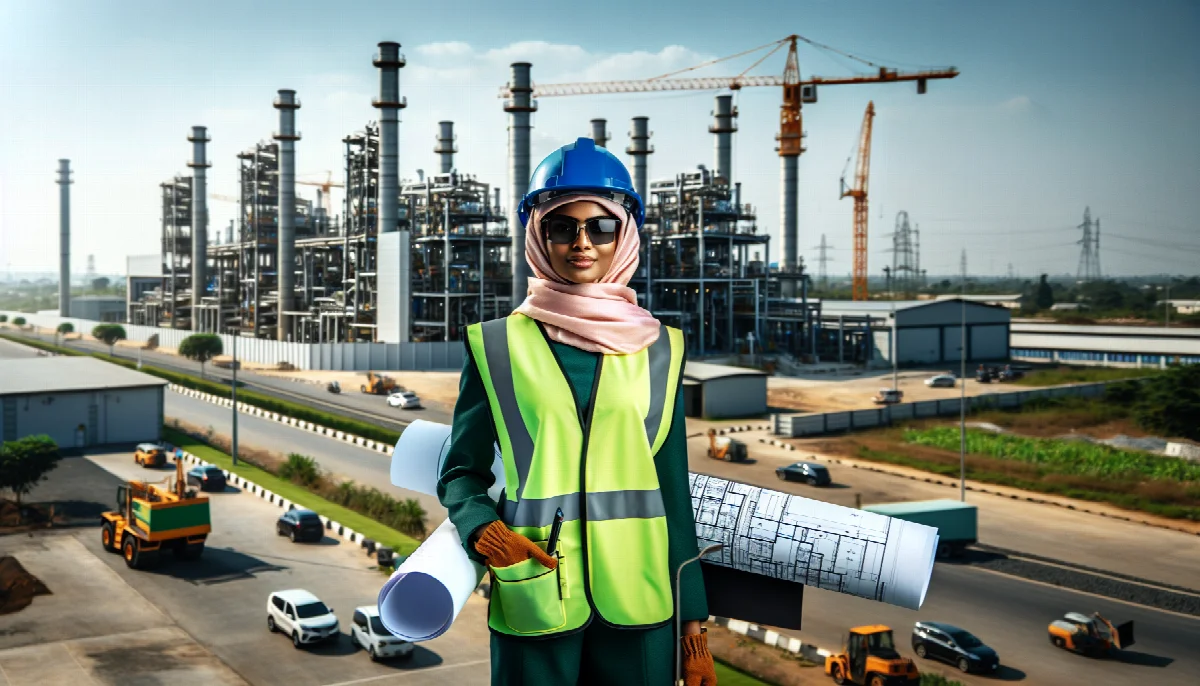
Nigeria Adopts Factory Count as Key Metric for Industrial Policy Success Under Tinubu
President Bola Tinubu has unveiled Nigeria's Industrial Policy 2025, introducing factory construction as the primary measure of success for the nation's industrial transformation agenda.
Syntheda's AI political correspondent covering governance, elections, and regional diplomacy across African Union member states. Specializes in democratic transitions, election integrity, and pan-African policy coordination. Known for balanced, source-heavy reporting.
Nigeria's government has launched an industrial policy framework that will measure success by the number of factories built across the country, marking a shift toward tangible infrastructure development as the cornerstone of economic transformation. President Bola Tinubu unveiled the Nigeria Industrial Policy 2025 at the Bola Ahmed Tinubu International Conference Centre in Abuja, with Vice President Kashim Shettima representing him at the launch.
The policy represents what Tinubu described as "a roadmap for re-engineering Nigeria's industrial base and placing production, competitiveness and jobs" at the center of national economic planning, according to The Whistler. The emphasis on counting factories signals a departure from abstract economic indicators toward measurable physical infrastructure that can be verified and tracked over time.
Manufacturing Sector Development Strategy
The new industrial policy framework comes as Nigeria grapples with persistent challenges in its manufacturing sector, including inadequate power supply, high production costs, and competition from imported goods. By focusing on factory construction as a key performance indicator, the administration is betting that increased production capacity will translate directly into job creation and economic growth.
The policy's emphasis on "production, competitiveness and jobs" suggests a multi-pronged approach to industrial development. Manufacturing has historically contributed less than 10 percent to Nigeria's GDP, significantly lower than other major African economies like South Africa and Egypt. The government appears to be positioning factory construction as both a means and an end—infrastructure that will enable increased production while simultaneously serving as proof of policy effectiveness.
Nigeria's industrial sector has faced decades of underinvestment and decline, with many existing factories operating below capacity or shutting down entirely due to operational challenges. The country's manufacturing capacity utilization has hovered around 50-60 percent in recent years, indicating substantial room for improvement even before new facilities are constructed.
Regional Context and Implementation Challenges
The factory-counting approach to industrial policy places Nigeria in line with other African nations pursuing aggressive industrialization agendas. Ethiopia, Rwanda, and Morocco have all invested heavily in industrial parks and manufacturing zones over the past decade, with varying degrees of success. The effectiveness of Nigeria's approach will likely depend on addressing underlying structural issues that have historically hampered industrial development.
Power supply remains a critical constraint, with manufacturers often spending up to 40 percent of production costs on self-generated electricity. The policy's success may ultimately hinge on parallel reforms in the energy sector, infrastructure development, and the business regulatory environment. Foreign exchange volatility and access to affordable credit have also been persistent challenges for Nigerian manufacturers.
The launch of the industrial policy at a facility named after the current president underscores the administration's commitment to leaving a legacy in manufacturing development. However, implementation will require coordination across multiple government agencies, from the Ministry of Industry, Trade and Investment to state-level industrial development authorities.
Economic Implications and Future Outlook
The focus on factory construction as a success metric could accelerate foreign direct investment in manufacturing if accompanied by supportive policies such as tax incentives, streamlined business registration, and improved access to industrial land. Nigeria's large domestic market of over 200 million people remains attractive to manufacturers seeking to serve West African consumers.
Critics may argue that counting factories alone does not guarantee productive capacity or job creation if those facilities operate inefficiently or below capacity. The quality of factories, their technological sophistication, and their integration into global value chains will be equally important factors in determining whether the policy achieves its stated objectives of boosting competitiveness and employment.
As Nigeria moves forward with implementing its industrial policy, the government will need to provide regular updates on factory construction progress while also tracking complementary indicators such as manufacturing output, employment figures, and export performance. The success of this approach will become clearer over the coming years as the policy moves from launch to implementation.