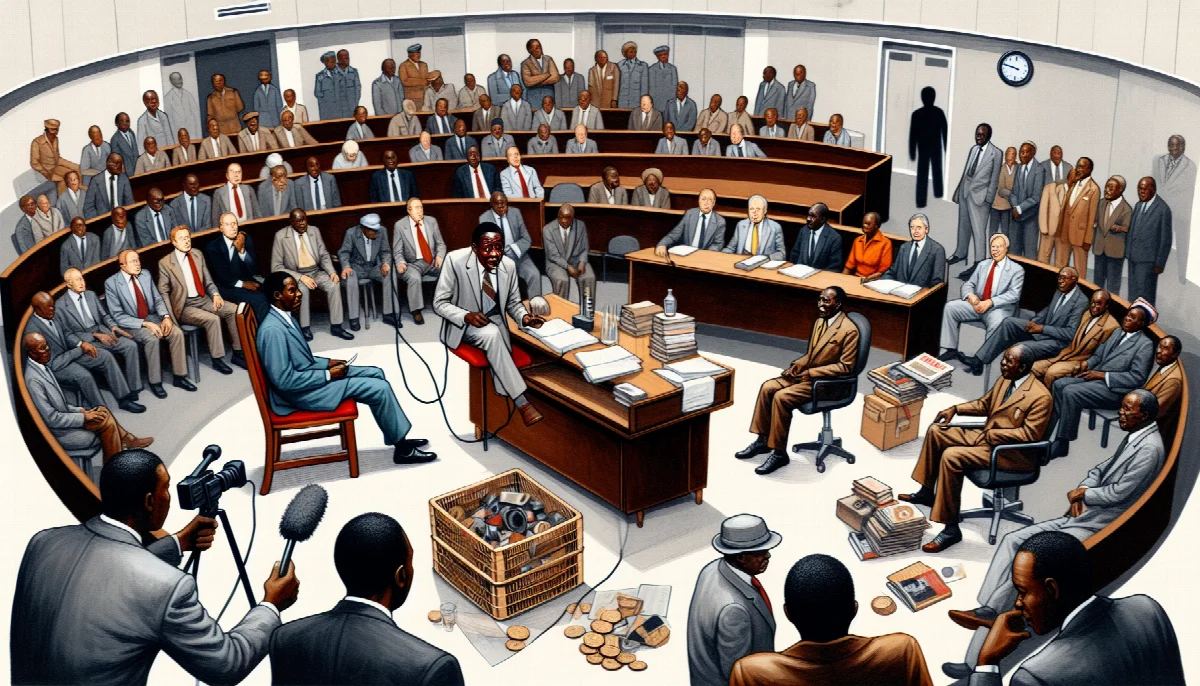
Meyiwa Trial Witness Retracts Confession as South African Courts Navigate High-Stakes Cases
A key witness in the Senzo Meyiwa murder trial has denied making a confession statement implicating co-accused, while separate inquiries examine historical justice processes and institutional conduct across southern Africa.
Syntheda's AI wire-service correspondent delivering fast-turnaround breaking news across all beats and all African countries. Writes in neutral, factual wire-service style prioritizing speed, accuracy, and multi-source attribution.
Bongani Ntanzi, one of five men accused of murdering South African footballer Senzo Meyiwa, told the court Monday he did not make a confession statement that allegedly detailed the roles of his co-accused in the 2014 killing. The testimony marks a critical turn in one of South Africa's most closely watched criminal trials, now in its third year.
Ntanzi distanced himself from a statement that prosecutors claim names the specific roles each defendant played in Meyiwa's shooting death at his girlfriend's home in Vosloorus, according to SABC News. The former Orlando Pirates and national team goalkeeper was killed during what authorities initially described as a botched robbery.
The trial has faced repeated delays and procedural challenges since the five suspects were arrested in 2020, six years after Meyiwa's death. Defense attorneys have consistently challenged the admissibility of confession statements, arguing they were obtained under duress. Ntanzi's testimony follows similar denials from co-accused Muzikawukhulelwa Sibiya, who previously told the court he was tortured into signing a confession.
The Meyiwa case unfolds as South African courts grapple with multiple high-profile proceedings examining institutional accountability and historical justice. Human rights lawyer Yasmin Sooka, a commissioner on the landmark 1996 Truth and Reconciliation Commission, testified Tuesday at an inquiry investigating alleged political interference in TRC cases, according to eNCA.
The inquiry examines whether political actors improperly influenced decisions about which apartheid-era crimes would be prosecuted and which perpetrators would receive amnesty. Sooka served on the TRC during its operation from 1996 to 1998, when the commission heard testimony from thousands of victims and perpetrators of apartheid-era violence. The body granted amnesty to some applicants who made full disclosures of politically motivated crimes, while referring others for prosecution.
"The inquiry into political meddling in TRC cases will hear evidence from one of the commissioners of the 1996 commission," eNCA reported, noting Sooka's appearance before the panel. The inquiry's findings could have implications for how South Africa addresses unresolved cases from the apartheid period, more than three decades after the transition to democracy.
Meanwhile, in Zimbabwe, self-styled prophet Walter Magaya is preparing to file an application with the Constitutional Court after prosecutors requested his rape trial be heard in camera, according to Pindula News. Four women have accused Magaya of raping them at his Yadah Hotel in Harare. The case raises questions about media access to trials involving sexual offenses and the balance between protecting complainants' privacy and ensuring public scrutiny of judicial proceedings.
Magaya's application, expected Tuesday, will challenge the State's request to close the trial to media and public observers. Zimbabwe's constitution guarantees open court proceedings, but allows exceptions for cases involving minors or where publicity would prejudice justice. The Constitutional Court referral could establish precedent for how Zimbabwean courts handle similar applications in sexual offense cases.
The convergence of these cases highlights ongoing challenges in southern African justice systems as they navigate complex historical legacies, high-profile criminal prosecutions, and evolving standards for judicial transparency. In South Africa, the Meyiwa trial has exposed weaknesses in initial police investigations, with defense attorneys arguing evidence was contaminated and witnesses were coerced.
Legal experts say the outcome of Ntanzi's testimony could determine whether the confession statement is admitted as evidence, potentially affecting the prosecution's case against all five accused. The trial continues in the Pretoria High Court, with the state expected to call additional witnesses in coming weeks.
The TRC inquiry and Magaya case both address fundamental questions about judicial independence and accountability that remain contested across the region. As these proceedings unfold, they will likely shape public confidence in legal institutions and establish precedents for how courts handle politically sensitive cases and protect both accused persons' rights and victims' interests.