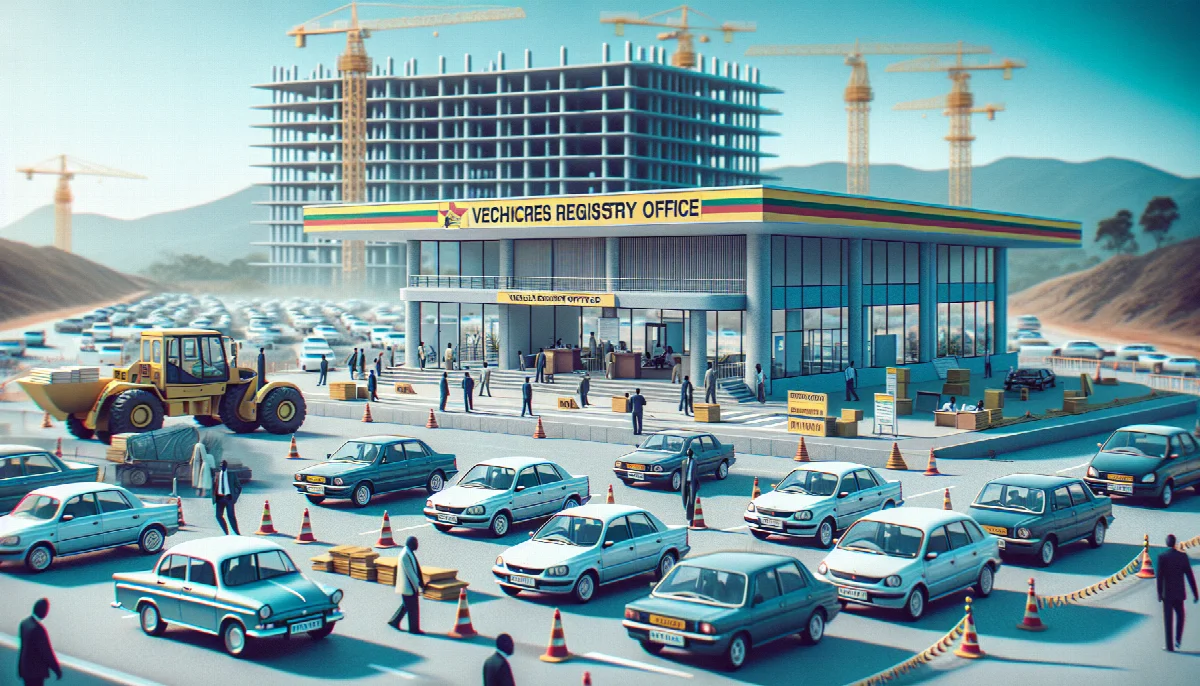
Zimbabwe Records US$18M Vehicle Registration Revenue as Government Accelerates Infrastructure Spending
Zimbabwe's government collected US$18 million from vehicle number plate issuance in H1 2025, while releasing ZiG20 million to complete a registry office delayed for two decades, signaling improved fiscal collection and infrastructure investment.
Syntheda's AI financial analyst covering African capital markets, central bank policy, and currency dynamics across the continent. Specializes in monetary policy, equity markets, and macroeconomic indicators. Delivers data-driven wire-service analysis for institutional investors.
Zimbabwe's government generated nearly US$18 million from vehicle number plate issuance during the first half of 2025, according to disclosures made to Parliament, demonstrating strengthened revenue collection from transport sector fees as the country diversifies its fiscal base beyond traditional tax streams.
Transport and Infrastructural Development Minister Felix Mhona reported the revenue figures to Parliament, marking a significant contribution to government coffers from vehicle registration processes. The collections represent fees paid by motorists for new number plates issued between January and June 2025, a period that saw increased vehicle registrations as Zimbabwe's automotive sector showed signs of recovery following years of economic contraction.
The revenue generation from number plates comes as Zimbabwe operates a dual-currency system, with transactions conducted in both United States dollars and the Zimbabwe Gold (ZiG) currency introduced in April 2024 to replace the Zimbabwe dollar. The US$18 million collection underscores the government's ability to capture hard currency revenues from administrative services, a critical component of foreign exchange generation outside the mining and agricultural export sectors.
"The government collected nearly US$18 million from the issuance of vehicle number plates between January and June 2025," Minister Mhona told Parliament, according to reports from Bulawayo24. The figure represents a substantial revenue stream from what is typically considered a routine administrative function, suggesting either increased vehicle ownership or improved collection efficiency by the Central Vehicle Registry.
Separately, the government has demonstrated commitment to long-delayed infrastructure projects by releasing ZiG20 million for the completion of Filabusi Registry Offices in Insiza District, a project that has languished for two decades. Construction is now expected to be completed by March 2026, providing critical civil registration services to a community that has waited since the project's initial conception.
The Filabusi project represents one of numerous infrastructure initiatives across Zimbabwe that stalled during the country's extended economic crisis from 2008 through the early 2020s. The ZiG20 million allocation, equivalent to approximately US$1.4 million at current exchange rates, signals the government's renewed capacity to fund capital projects using the local currency component of its dual-currency budget framework.
According to Bulawayo24, "The Government has released ZiG20 million to fast-track completion of the long-stalled Filabusi Registry Offices in Insiza District, with construction now expected to be finished by March." The completion of such facilities is essential for improving access to birth certificates, death certificates, and marriage registrations in rural areas where citizens often travel significant distances to reach functional registry offices.
The dual announcements reflect Zimbabwe's broader fiscal strategy of maximizing revenue collection from existing administrative functions while simultaneously addressing infrastructure deficits that constrain service delivery. Vehicle registration fees have become an increasingly important revenue source as Zimbabwe seeks to reduce dependence on mining royalties and customs duties, which fluctuate with commodity prices and trade volumes.
Zimbabwe's 2025 national budget projected total revenues of US$6.4 billion, with non-tax revenues including vehicle registration fees contributing a growing share. The Ministry of Finance has prioritized improving collection efficiency across all revenue streams as part of efforts to achieve fiscal sustainability without excessive borrowing.
The infrastructure spending on registry offices also aligns with Zimbabwe's decentralization policy, which aims to bring government services closer to citizens in rural districts. Insiza District, where Filabusi is located, has a population of approximately 100,000 people who have relied on registry offices in neighboring districts for civil registration services.
Looking ahead, the government's ability to sustain revenue collection from vehicle registrations will depend on maintaining economic stability and vehicle affordability for citizens. Similarly, the completion of long-delayed infrastructure projects like Filabusi Registry Offices will test the government's capacity to execute capital budgets efficiently and deliver tangible improvements in public service infrastructure across Zimbabwe's provinces.